Appetite vs Hunger: What's the Difference?
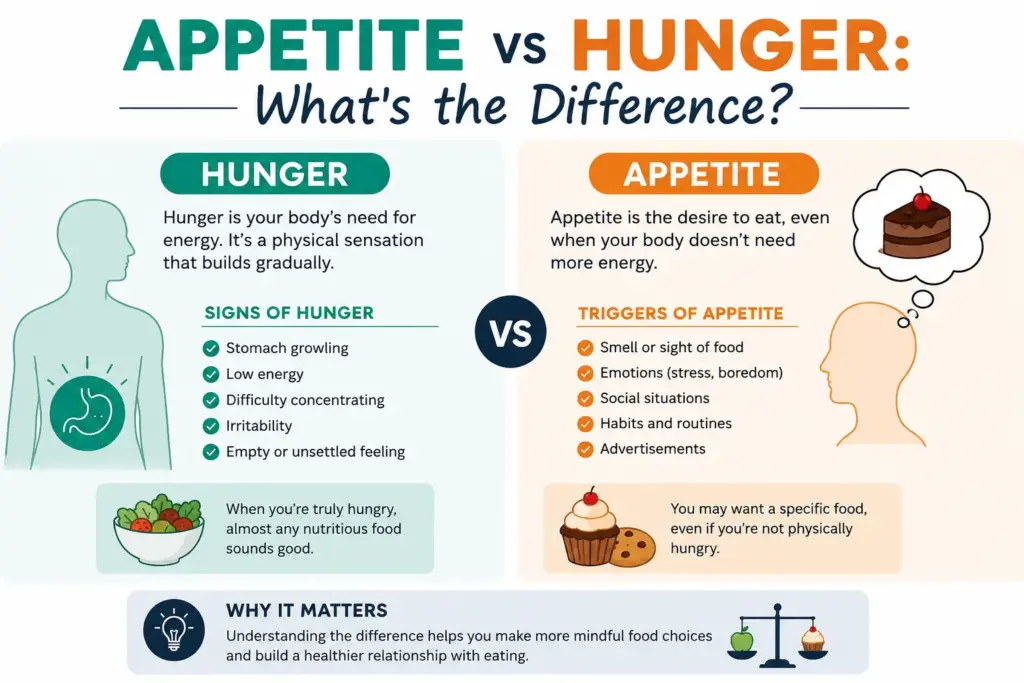
Most people use the words “appetite” and “hunger” interchangeably. If someone says they’re hungry, we usually assume they simply want to eat. However, appetite and hunger are not exactly the same thing.
Understanding the difference can provide valuable insight into eating habits, food choices, and weight-management challenges. In fact, many people discover that what they believed was hunger was actually something entirely different.
Learning to recognize these signals may help create a healthier and more balanced relationship with food.
This simple awareness can often be the first step toward making more mindful food choices throughout the day.
What Is Hunger?
Hunger is the body’s physical way of telling us that it needs energy.
It is a biological signal designed to encourage eating when fuel levels begin to drop. Hunger develops gradually and is often accompanied by physical sensations such as:
- A growling stomach
- Low energy
- Difficulty concentrating
- Mild weakness
- Feeling empty or unsettled
True hunger is driven by the body’s need for nourishment rather than emotions or external influences.
When you’re genuinely hungry, almost any nutritious meal sounds appealing.
What Is Appetite?
Appetite is different.
Unlike hunger, appetite is the desire to eat even when the body may not physically need food.
Appetite can be triggered by many factors, including:
- The smell of freshly baked food
- Seeing a favorite dessert
- Stress or boredom
- Social situations
- Advertisements
- Habits and routines
For example, you may have just finished dinner and feel completely satisfied, yet still find yourself wanting a slice of cake when dessert appears.
That desire is appetite, not hunger.
Why the Difference Matters
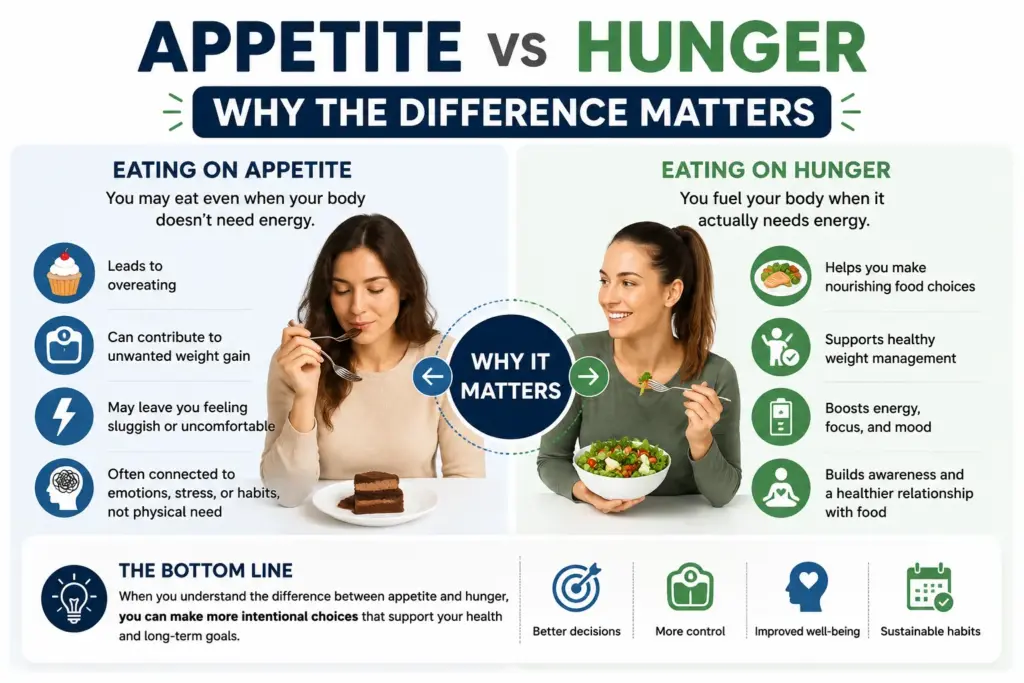
Many people struggle with weight management because appetite can sometimes override hunger.
The body may already have enough energy, but environmental cues and emotional triggers encourage additional eating.
This doesn’t mean a person lacks willpower.
In reality, appetite is influenced by a variety of biological, psychological, and social factors that can affect nearly everyone.
Recognizing whether you’re experiencing hunger or appetite may help you make more intentional decisions around food.
Common Signs You're Experiencing Appetite Rather Than Hunger
While the distinction is not always obvious, there are a few clues.
You may be experiencing appetite if:
- You’re craving a specific food.
- You recently ate a meal.
- Food becomes appealing after seeing or smelling it.
- Eating is connected to boredom or stress.
- Hunger disappears when distracted.
In contrast, genuine hunger tends to become stronger over time and is usually satisfied by a variety of foods.
The Growing Interest in Appetite Management
In recent years, appetite management has become one of the most discussed topics in the weight-management world.
Researchers and healthcare providers have become increasingly interested in understanding how appetite influences eating behavior and long-term weight-management success.
If you’d like to learn more about modern approaches to appetite support and weight management, our detailed Gala GLP-1 Reviews & Complaints 2026 guide explores why appetite regulation has become such an important part of the conversation.
How Habits Can Influence Appetite
Many people assume appetite is completely outside their control.
However, everyday habits can influence how often appetite-driven eating occurs.
Some examples include:
- Eating too quickly
- Skipping meals
- Poor sleep quality
- High stress levels
- Frequent exposure to tempting foods
Small lifestyle changes may help individuals become more aware of their eating patterns and improve their ability to distinguish between hunger and appetite.
Emotional Eating and Appetite
One of the most common appetite triggers is emotion.
Stress, anxiety, frustration, loneliness, and even celebration can create a desire to eat despite the absence of physical hunger.
Food often provides comfort, distraction, or pleasure, which is why emotional eating is such a common experience.
Recognizing emotional triggers can help people better understand their relationship with food and identify alternative ways to manage emotions.
Why Awareness Matters More Than Perfection

It’s unrealistic to expect every eating decision to be driven purely by hunger.
Food is an important part of culture, family gatherings, celebrations, and daily enjoyment.
The goal isn’t to eliminate appetite.
Instead, the goal is to become more aware of when appetite is influencing food choices.
This awareness allows people to make decisions intentionally rather than automatically.
Final Thoughts
Although appetite and hunger are closely related, they are not the same thing. Hunger is the body’s physical need for energy, while appetite is the desire to eat that can be influenced by emotions, habits, and external cues.
Understanding the difference may help you develop greater awareness around eating behaviors and create healthier habits over time. The more familiar you become with your body’s signals, the easier it becomes to make food choices that align with your long-term wellness goals.
Privacy Policy | Disclaimer | Terms and Conditions | Author Bio
FDA Compliance
All content and information found on this page are for informational purposes only and are not intended to diagnose, treat, cure or prevent any disease. The FDA hasn’t evaluated the statements provided on this page. Make sure you consult with a licensed doctor before taking any supplement or making any changes to your diet or exercise plan. Individual results may vary.
The display of third-party trademarks and trade names on this site does not necessarily indicate any affiliation or endorsements of our website. If you click a merchant link and buy a product or service on their website, we may be paid a fee by the merchant.
Copyright © 2026 –Galaglp1us