
Why Do Some People Lose Weight More Easily Than Others?
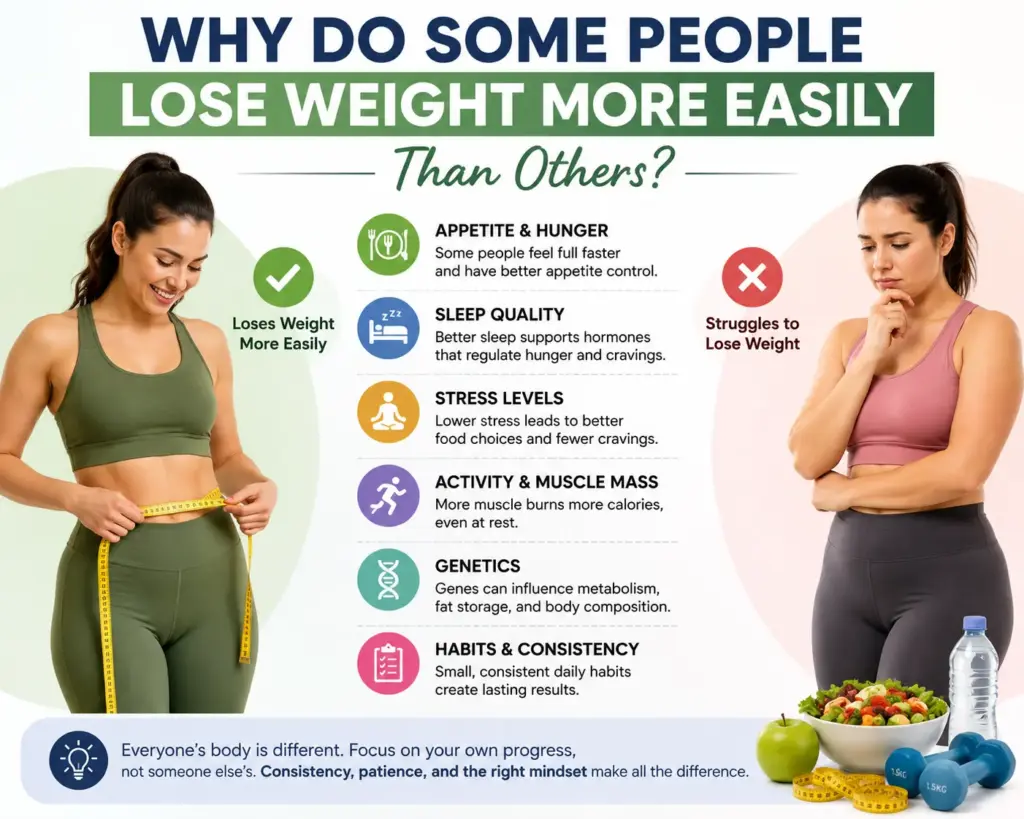
Have you ever looked at someone who seems to lose weight effortlessly and wondered what they’re doing differently?
It’s a common frustration. Two people can follow similar eating plans, exercise routines, and lifestyle habits, yet one appears to make progress much faster than the other. This often leads people to believe they’re doing something wrong or that their body is somehow working against them.
The truth is that weight management is influenced by many factors, some of which are obvious and some that happen quietly behind the scenes. Understanding these differences can help you set more realistic expectations and focus on what you can control.
While genetics and individual circumstances may influence the journey, they rarely tell the whole story. Small daily habits, appetite awareness, and consistency often make a much bigger difference than most people realize.
Everyone Starts From a Different Place
One of the biggest reasons weight-loss journeys look different is that no two people start from the same point.
Factors such as age, body composition, activity level, and overall health can all influence how the body responds to lifestyle changes. Someone with more weight to lose may notice larger changes early on, while another person may experience slower but equally meaningful progress.
Comparing your results to someone else’s can be misleading because their circumstances are rarely identical to yours.
Appetite Plays a Bigger Role Than Many People Realize
When people talk about weight loss, they often focus on exercise and calories. While those factors matter, appetite can have an enormous influence on long-term success.
Some individuals naturally feel satisfied after smaller meals. Others may experience stronger hunger signals throughout the day, making it more difficult to maintain consistent eating habits.
This difference doesn’t mean one person has more willpower than another. It simply highlights how appetite regulation can vary from person to person.
People who feel satisfied sooner often find it easier to maintain a calorie deficit without constantly thinking about food.
Daily Habits Add Up Over Time
Weight loss rarely comes down to a single decision.
Instead, it reflects hundreds of small choices made every week.
For example:
- Choosing water instead of sugary drinks
- Going for a short walk after dinner
- Eating slowly during meals
- Prioritizing sleep
- Including more protein in meals

None of these actions seem dramatic on their own, but over time they can produce meaningful results.
Many people who appear to lose weight easily have developed habits that support their goals without realizing it.
Sleep Can Influence Weight-Loss Progress
Sleep is often overlooked when discussing weight management.
Poor sleep can affect:
- Hunger levels
- Food cravings
- Energy
- Mood
- Decision-making
When people are tired, they may find it harder to resist tempting foods or maintain healthy routines consistently.
In contrast, individuals who prioritize quality sleep often have an easier time sticking to healthy habits throughout the day.
Stress Affects More Than Your Mood
Modern life can be stressful, and stress doesn’t just affect mental well-being.
Many people notice changes in eating behavior when they’re stressed.
Some lose their appetite, while others find themselves reaching for comfort foods more often. Chronic stress can make healthy choices feel more difficult and may contribute to inconsistent eating patterns.
Managing stress through exercise, hobbies, mindfulness, or relaxation techniques may indirectly support weight-management efforts.
Muscle Mass Can Make a Difference
Not all weight is the same.
People with more muscle mass often burn more energy throughout the day compared to those with less muscle. This doesn’t mean someone can exercise their way out of poor eating habits, but body composition can influence overall energy expenditure.
Strength training and maintaining muscle mass may support long-term health and weight-management goals.
Consistency Often Beats Intensity
Many people begin a weight-loss journey with extreme enthusiasm.
They commit to intense workout schedules, restrictive diets, and ambitious goals. While this can create short-term motivation, it isn’t always sustainable.
People who lose weight successfully over the long term often focus on consistency rather than perfection.
They understand that occasional setbacks are normal and that progress comes from continuing healthy habits even when motivation fades.
The Growing Interest in Appetite Management

One reason appetite management has become such a popular topic in recent years is that many people are beginning to recognize how powerful hunger and fullness signals can be.
Instead of relying entirely on willpower, some individuals explore strategies that support healthier eating patterns and improved appetite awareness.
If you’re interested in learning more about appetite support, weight-management approaches, and current options available in 2026, you can explore our detailed Gala GLP-1 Reviews & Complaints 2026 guide for additional insights.
Genetics May Influence the Journey
Genetics can also play a role in how people gain, lose, and maintain weight.
However, genetics should not be viewed as destiny.
While some individuals may face greater challenges than others, lifestyle choices still have a significant impact on long-term outcomes.
Focusing on factors within your control is often far more productive than worrying about factors you cannot change.
Why Comparing Yourself to Others Can Be Misleading
Social media often shows the highlights of someone else’s journey.
People tend to share dramatic transformations, success stories, and exciting milestones while leaving out the challenges, setbacks, and difficult days.
As a result, it’s easy to assume that everyone else is making faster progress.
The reality is that most successful weight-loss journeys involve patience, consistency, and persistence over time.
Your progress does not need to look like someone else’s to be meaningful.
Final Thoughts
Some people appear to lose weight more easily than others because of differences in appetite, habits, sleep, stress levels, body composition, and individual circumstances. While these factors can influence the journey, they don’t determine the outcome.
The most successful approach is often the one you can maintain consistently over the long term. Rather than comparing yourself to others, focus on building habits that support your own health goals and celebrate progress, no matter how gradual it may seem.
Privacy Policy | Disclaimer | Terms and Conditions | Author Bio
FDA Compliance
All content and information found on this page are for informational purposes only and are not intended to diagnose, treat, cure or prevent any disease. The FDA hasn’t evaluated the statements provided on this page. Make sure you consult with a licensed doctor before taking any supplement or making any changes to your diet or exercise plan. Individual results may vary.
The display of third-party trademarks and trade names on this site does not necessarily indicate any affiliation or endorsements of our website. If you click a merchant link and buy a product or service on their website, we may be paid a fee by the merchant.
Copyright © 2026 –Galaglp1us