
Common Weight-Loss Mistakes That Slow Progress
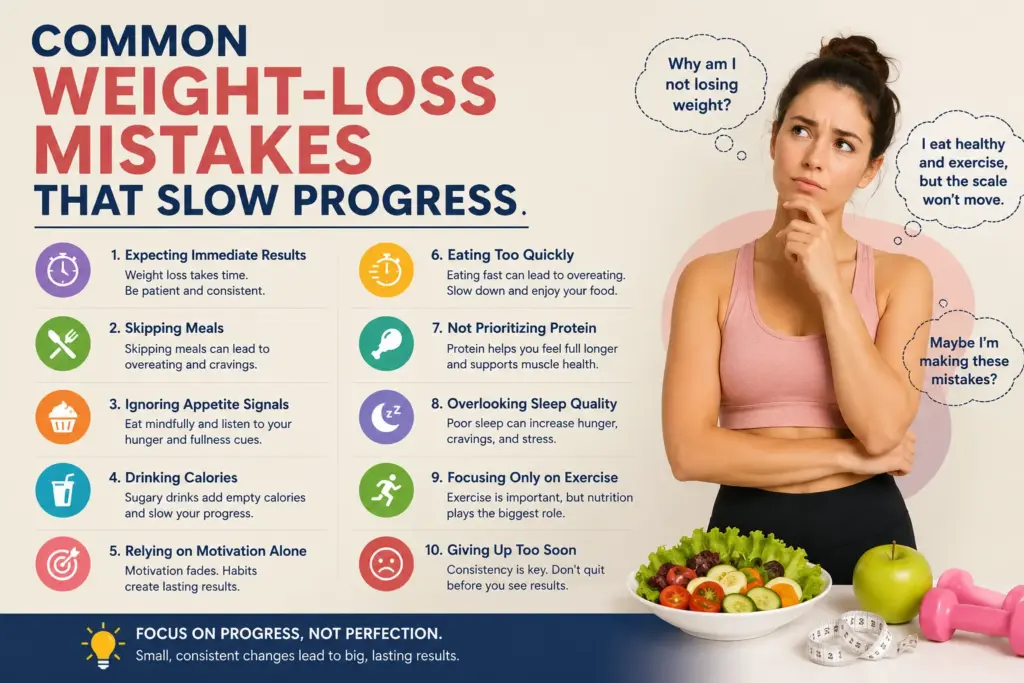
Losing weight often sounds simple on paper: eat less, move more, and the results should follow. Yet many people discover that real-life weight management is rarely that straightforward.
It’s not uncommon to spend weeks making changes only to feel disappointed when progress seems slower than expected. In many cases, the problem isn’t a lack of effort. Instead, small mistakes can quietly interfere with results and make the journey feel more difficult than it needs to be.
Understanding these common obstacles can help you make smarter decisions and stay focused on long-term success.
1. Expecting Immediate Results
One of the biggest mistakes people make is expecting dramatic changes within a few days.
Weight management is a gradual process. The body needs time to adapt to new eating habits, activity levels, and lifestyle adjustments. While rapid transformations make for exciting headlines, sustainable progress often happens much more slowly.
People who focus only on the scale may become discouraged and give up before meaningful results have time to appear.
Instead of measuring success day by day, consider looking at trends over several weeks or months.
2. Skipping Meals
Many people assume that eating less frequently will automatically lead to faster weight loss.
Unfortunately, skipping meals can sometimes have the opposite effect.
Going long periods without eating may leave some individuals feeling excessively hungry later in the day. This can increase the likelihood of overeating or making impulsive food choices.
Balanced meals eaten at regular intervals often make it easier to manage hunger and maintain consistent energy levels.
3. Ignoring Appetite Signals
Modern life can make it easy to disconnect from natural hunger and fullness cues.
People often eat because:
- It’s lunchtime.
- Food is available.
- They’re bored.
- They’re stressed.
- They’re distracted.
Learning to recognize genuine hunger and fullness signals can help improve portion awareness and reduce unnecessary eating.

Paying attention to how your body feels before, during, and after meals may provide valuable insight into your eating habits.
4. Drinking Calories Without Realizing It
Many beverages contain more calories than people realize.
Sweetened coffee drinks, soft drinks, energy drinks, and specialty beverages can contribute significant calories throughout the day without providing the same sense of fullness as solid foods.
This doesn’t mean every drink must be avoided, but becoming aware of liquid calorie intake can help support better decision-making.
Water remains one of the simplest and most effective choices for hydration.
5. Relying on Motivation Alone
Motivation is powerful, but it isn’t always reliable.
Most people feel highly motivated at the beginning of a new health journey. The challenge comes when enthusiasm naturally fades.
Long-term success often depends more on routines and habits than motivation itself.
Creating simple systems can help:
- Planning meals ahead of time
- Keeping healthier foods available
- Maintaining a consistent sleep schedule
- Establishing regular physical activity
When healthy choices become habits, they require less mental effort.
6. Eating Too Quickly
Many people finish meals in just a few minutes.
When eating happens too quickly, the body may not have enough time to communicate fullness signals effectively.
As a result, it’s easier to consume larger portions before realizing satisfaction has already been reached.
Slowing down during meals, chewing thoroughly, and minimizing distractions can help improve awareness of fullness and satisfaction.
7. Not Prioritizing Protein
Protein plays an important role in many healthy eating plans.
Compared to some other foods, protein may help people feel satisfied for longer periods after eating. This can make it easier to manage hunger throughout the day.
Good protein sources include:
- Lean meats
- Fish
- Eggs
- Greek yogurt
- Legumes
- Cottage cheese
Including protein in meals and snacks may support better appetite control and meal satisfaction.
8. Overlooking Sleep Quality
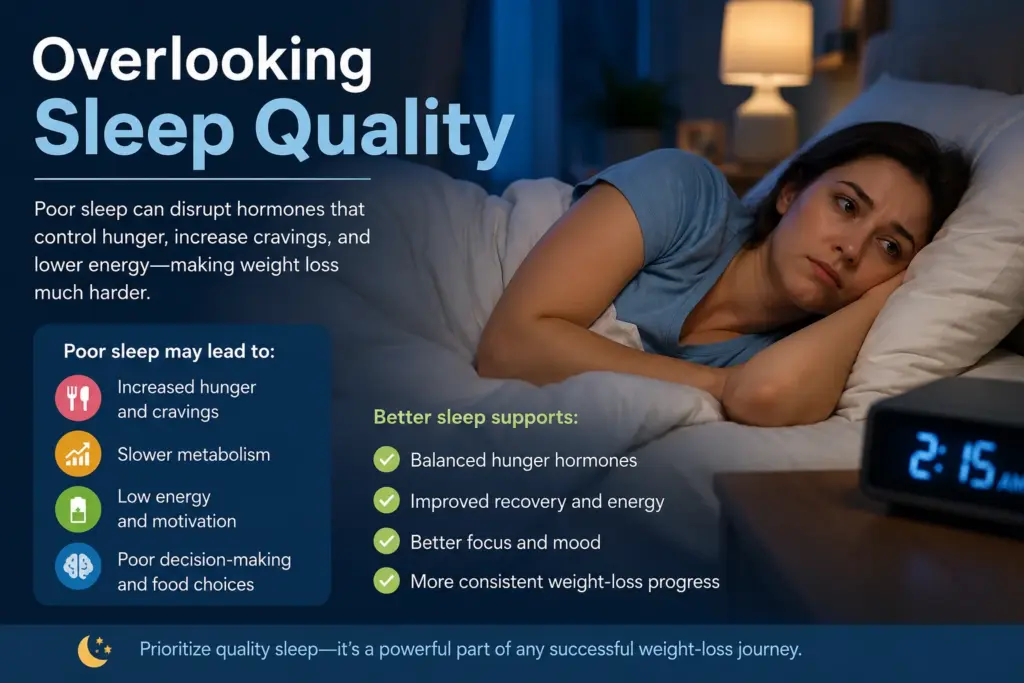
Sleep and weight management are more connected than many people realize.
Poor sleep can influence:
- Hunger levels
- Food cravings
- Energy levels
- Decision-making
When people are tired, they may find it more difficult to maintain healthy habits consistently.
Prioritizing quality sleep is often one of the most overlooked strategies for supporting overall wellness.
9. Focusing Only on Exercise
Exercise provides many health benefits, but it should not be viewed as the only solution.
Some individuals attempt to compensate for poor eating habits by exercising harder. Unfortunately, this approach can be difficult to maintain over time.
The most effective weight-management strategies typically combine:
- Balanced nutrition
- Physical activity
- Consistent habits
- Adequate rest
- Appetite awareness
These factors work together to create sustainable results.
10. Giving Up Too Soon
Perhaps the most common mistake of all is quitting before progress has had time to accumulate.
Many successful weight-loss journeys involve periods where results seem slow or even temporarily stalled.
Consistency often matters more than perfection.
A single unhealthy meal, missed workout, or challenging week does not erase previous efforts. What matters most is returning to healthy habits and continuing forward.
Final Thoughts
Weight loss is rarely determined by one single decision. More often, it reflects the accumulation of daily habits, choices, and routines over time.
By avoiding common mistakes such as skipping meals, eating too quickly, ignoring appetite signals, and expecting immediate results, individuals can create a more sustainable approach to long-term weight management.
For those interested in learning more about appetite support, healthy habits, and modern approaches to weight management, be sure to check out our Gala GLP-1 Reviews & Complaints 2026 guide.
Privacy Policy | Disclaimer | Terms and Conditions | Author Bio
FDA Compliance
All content and information found on this page are for informational purposes only and are not intended to diagnose, treat, cure or prevent any disease. The FDA hasn’t evaluated the statements provided on this page. Make sure you consult with a licensed doctor before taking any supplement or making any changes to your diet or exercise plan. Individual results may vary.
The display of third-party trademarks and trade names on this site does not necessarily indicate any affiliation or endorsements of our website. If you click a merchant link and buy a product or service on their website, we may be paid a fee by the merchant.
Copyright © 2026 –Galaglp1us